
1.6.1 The Singularity
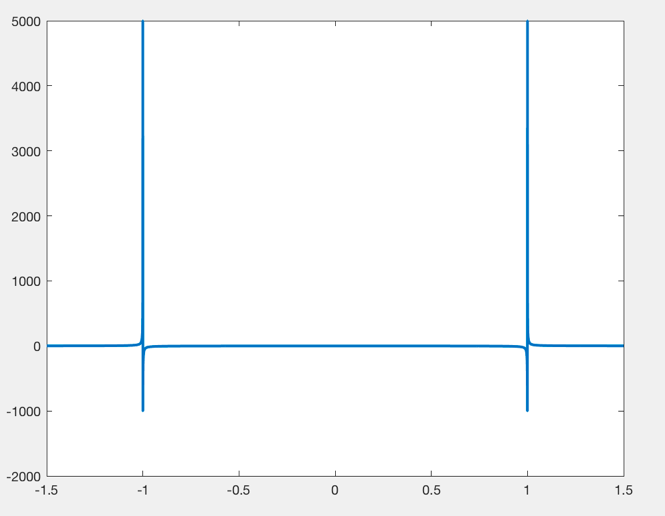
At the end of Chapter 5 we touched upon the sphere of tangent spaces as the singularity situated at the origin space. In mathematics, the term singularity denotes a point where a given mathematical object, such as an equation or a surface, is not defined or ceases to be well-behaved in the analytic sense.1 As an individual mathematical object, the infinite sphere of tangent spaces is continuous and well-behaved, as shown in the last chapter, and would not fit the mathematical definition of a singularity in this regard. We use the term singularity mindful of the perspective from which it is being analyzed, and when using real analysis, this would meet the criteria for a mathematical singularity. To demonstrate this point, we can take the function , and plot this in the Cartesian plane, where it is readily seen, for , the function goes to infinity (Figure 1.6.1.a), for on the interval .
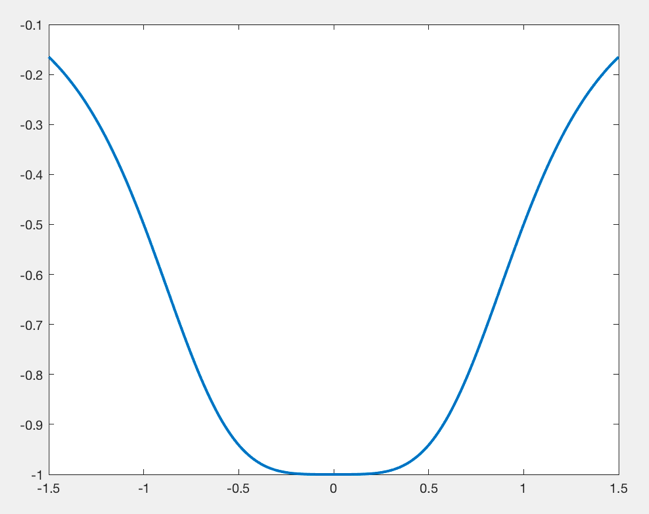
By taking the same function for as imaginary-valued, we find the completely different result of a continuous curve, without the singular poles for the real-valued function, as seen above in Figure 1.6.1.b. A surface plot of the function , for , as a combination of the real and imaginary function components, reveals the continuous function plotted in Figure 1.6.2.
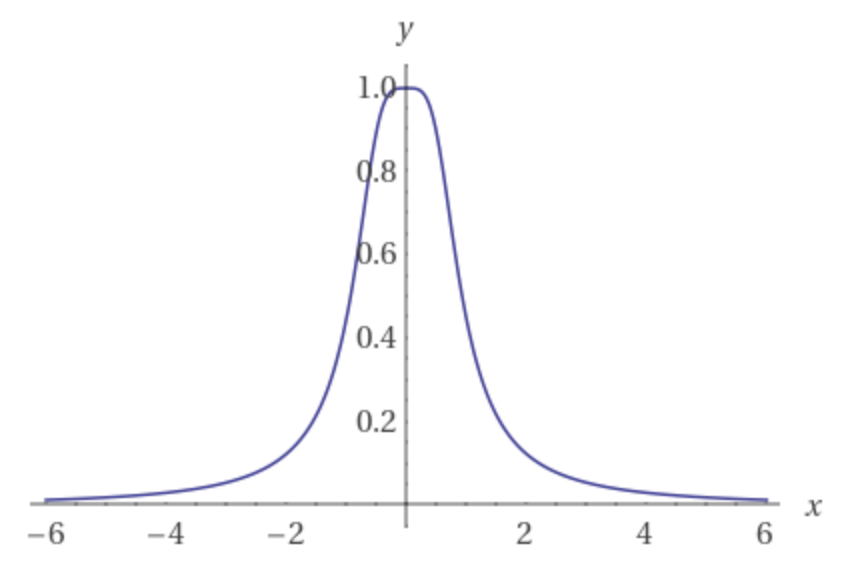
By the definition, for , the function admits no real solutions for , in its denominator, when solved for zero
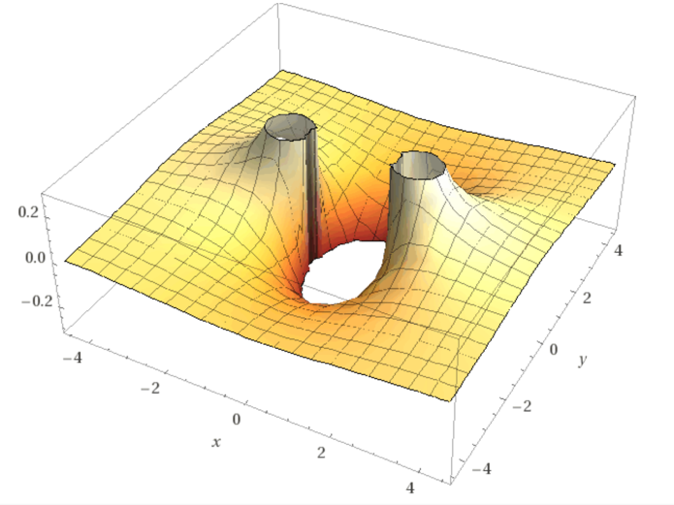
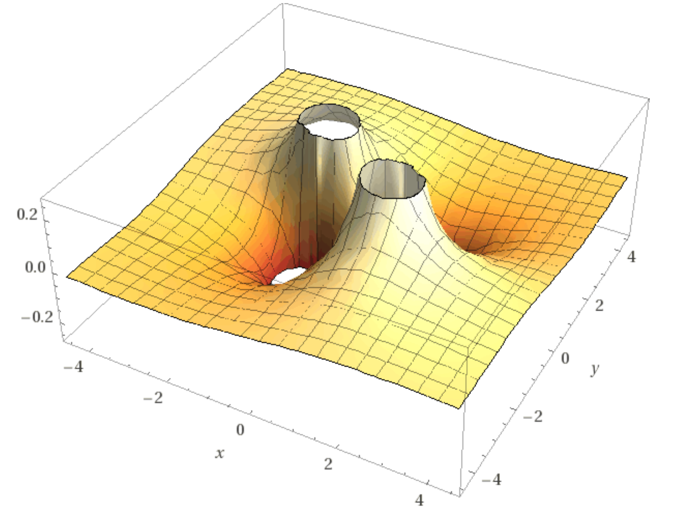
which restrains the function from going off to infinity. For , in the above, we could choose , or to find, once again, singularities lurking in the function. The case in point, the function for , has singularities which form on its surface for , and , seen in Figure 1.6.3, below.
We consider a similar concept for the group, a subgroup , and if our perspective was confined to the real numbers, representative of the disjoint hyperbolae in the -planes, it would appear as disconnected for absolute number values (Figure 1.6.4).
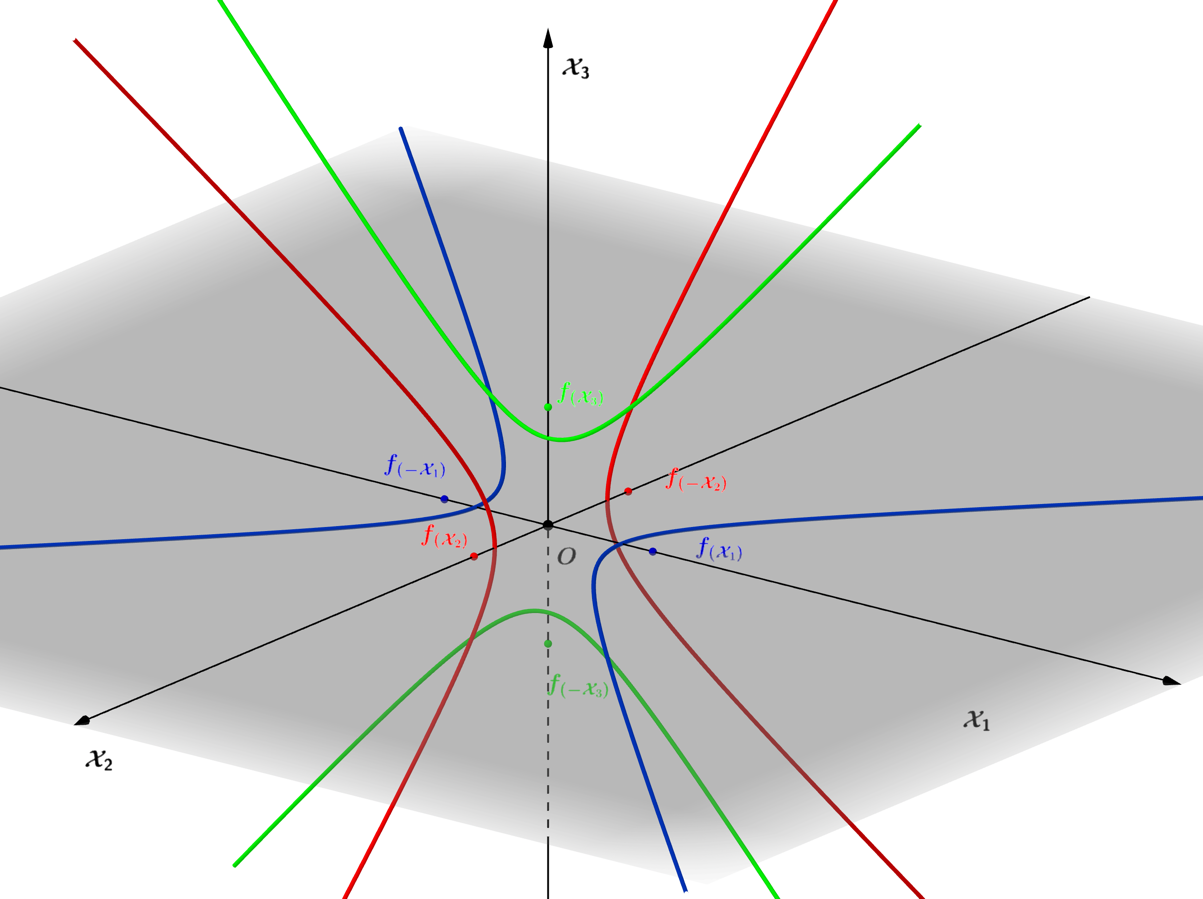
From the perspective of and the group, we know that the hyperbolae are not disconnected, when taken in the context of their Lie algebra subgroup representation, and on the surface of the continuous sphere of tangent spaces group .
- "The Definitive Glossary of Higher Mathematical Jargon — Singularity". Math Vault. 2019-08-01.